
Moving your business communications from a traditional phone system to the cloud is an easy call these days. Picking one of the many VoIP providers out there is the hard part! On paper, almost every VoIP service provider promises crystal-clear calls, unlimited calling, and a long list of advanced features. In practice, some keep your phones ringing through anything, and others leave you with dropped calls and a support ticket.
So, what separates reliable VoIP providers from the rest? Below, we’ll walk through what really matters, plus a simple “what to look for” checklist. Spoiler: AI is quickly becoming the biggest difference between a basic VoIP phone service and a great one. Tools like AI receptionist software are changing how businesses handle incoming calls.
First, What Is a VoIP Phone System?
VoIP stands for Voice over Internet Protocol. Instead of running voice calls over a traditional phone line, a VoIP phone system turns your voice into data and sends it over your internet connection. The FCC explains that VoIP lets you make phone calls from a computer, a VoIP phone, or a mobile device.
Because VoIP relies on the internet instead of copper wires, you aren’t tied to one desk or one office. You can make and receive calls from desk phones, a laptop, or a mobile app on your mobile phone. That flexibility is a big reason cloud-based phone systems are replacing traditional phone services and the old landline phone.
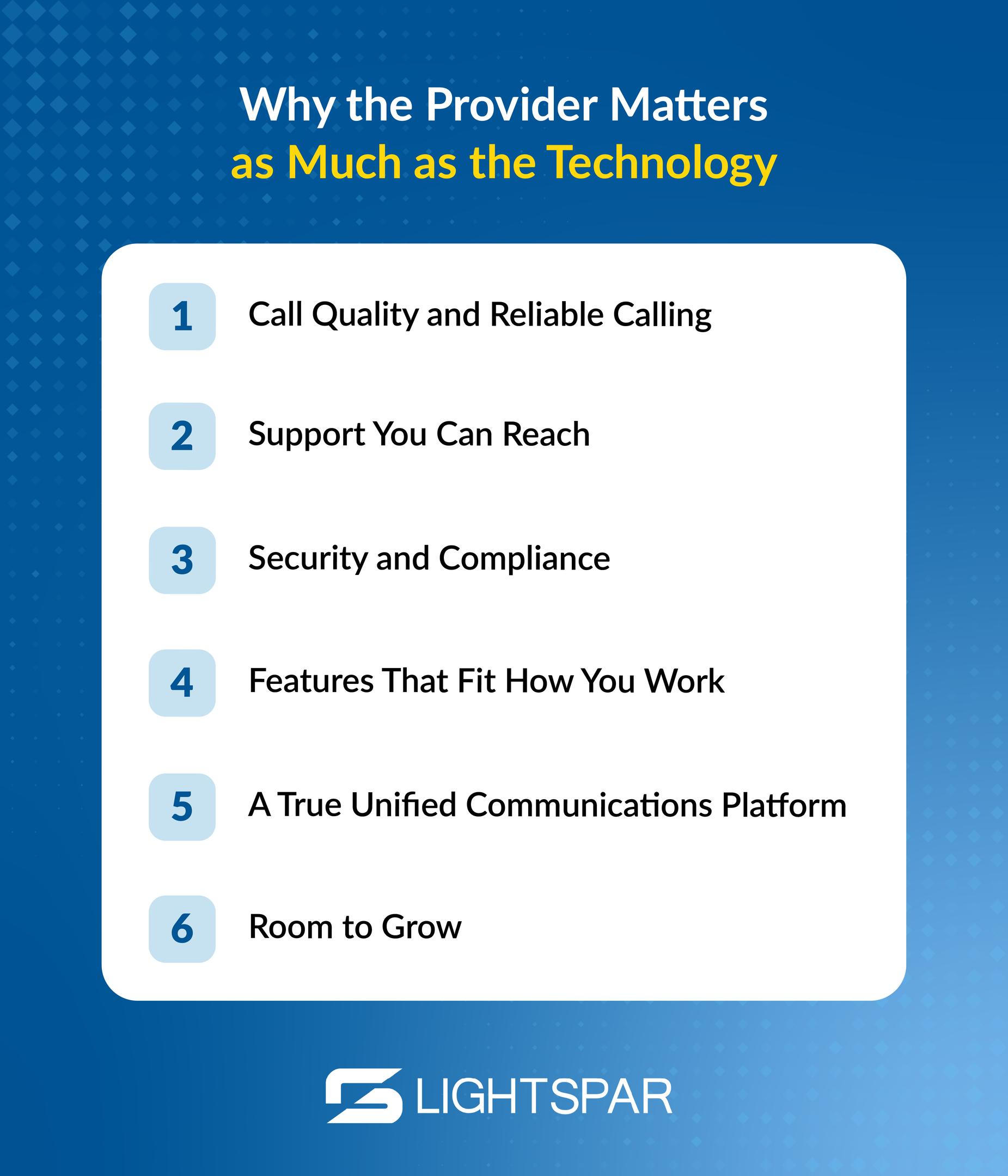
Why the Provider Matters as Much as the Technology
Most modern VoIP systems use the same basic technology. The difference is how each provider builds, runs, and supports it. Here’s where reliable service providers pull ahead.
1. Call Quality and Reliable Calling
Clear VoIP calls are the bare minimum. Reliable calling comes from a provider’s network, its redundancy, and how it handles traffic. Look for a provider that guarantees at least 99.99% uptime in its service-level agreement and backs that promise with geo-redundant data centers.
Your own setup matters too. Every VoIP system needs a stable internet connection for good call quality, so a good provider will check your bandwidth before you switch. They should also tell you how calls get rerouted if your office internet goes down. With automatic call forwarding to a mobile phone, an outage doesn’t have to mean missed calls.
2. Support You Can Reach
When your phones are down, a chatbot and a 3-day email reply won’t cut it. The best VoIP service providers offer 24/7 phone support plus chat and email, with real people who know your account. Before you sign, ask who you’ll talk to when something breaks, especially outside business hours.
3. Security and Compliance
Your calls carry customer data, so security should be part of the conversation from day one. Ask about end-to-end call encryption, secure admin access, and how call recording files are stored. If you work in healthcare or another regulated field, make sure the provider can support HIPAA Security Rule requirements and will sign the paperwork to prove it.
Also ask how the provider handles emergency calls. The FCC’s guidance on VoIP and 911 service explains why accurate location information matters, especially for remote employees who may use their phones from different locations.
4. Features That Fit How You Work
Today’s VoIP solution should do far more than ring a phone. Core features to expect include:
- Auto attendant and call routing: Greet callers and send them to the right person or department. Some systems let you build call flows with a drag-and-drop interface.
- Voicemail transcription: Read your messages in email or the app instead of listening to them.
- Call recording: Use automatic call recording for training, quality checks, and compliance.
- Phone numbers: Keep your existing numbers, add a local number in a new market, set up a toll free number, or manage multiple phone numbers from one account.
- Calling plans: Unlimited domestic calling is standard with most providers. If you work with overseas customers, ask about international calling or unlimited international calling options.
5. A True Unified Communications Platform
The best VoIP service brings everything into one place. A unified communications platform combines voice, video conferencing, video meetings, team messaging, and instant messaging in a single app. That means your team can jump from a chat into video calls without switching tools.
Integrations matter here too. Many VoIP systems connect with your CRM, Microsoft 365, Google Workspace, and other business apps. With those connections, customer details pop up on inbound calls and outbound calls get logged automatically. Learn more about how unified communications keeps teams connected.
6. Room to Grow
A hosted VoIP setup should scale up or down without new hardware. Adding phone lines for a new hire should take minutes, not a service call. Also check that the provider supports the equipment you already have. If your team prefers physical desk phones, make sure they’re supported alongside the mobile app. And the app should be light enough to run well on an employee’s entry-level mobile plan.
The New Difference: AI Features
Here’s where the gap between providers is growing fastest. Older communications systems simply connected calls. Newer cloud VoIP services use AI tools to handle the work around them, including:
- AI call summaries and transcripts so nobody has to take notes during a call.
- Smart call routing that sends callers to the right person based on what they need.
- Virtual receptionist and AI receptionist software that can answer calls 24/7, respond to common questions, take messages, and hand off to a live person when needed.
That last one is a big deal for small teams. Missed calls are missed opportunities, and an AI receptionist means you can receive incoming calls after business hours, during lunch, or when everyone’s already on the phone. It works like a call center front desk without the call center price tag.
Your “What to Look For” Checklist
Use this list when you compare VoIP providers:
- 99.99% uptime guarantee backed by a written SLA
- Strong call quality, with network redundancy and failover options
- 24/7 phone support with real people
- End-to-end encryption and support for compliance needs like HIPAA
- Clear pricing with no hidden fees
- Auto attendant, call routing, call forwarding, and voicemail transcription included
- Video, team messaging, and integrations with the apps you already use
- Support for both desk phones and mobile devices
- Easy scaling as your team grows
- AI features built into the VoIP platform, like call summaries and an AI receptionist
You can also read customer reviews to see how a provider handles problems in the real world, not just in a sales demo.
Find the Best VoIP Fit With LightSpar
Moving your business phone system off traditional telephony is a smart move, but the provider you choose makes all the difference. The best VoIP partner gives you more than a dial tone. It gives you reliable service, real support, and features that help your business grow.
At LightSpar, we build each VoIP phone service around your business, not the other way around. That includes AI receptionist software that helps keep your business responsive, even when your team is unavailable.
Ready to see the difference? Contact us today to talk with our team!