
Table of Contents
The best SIP trunk provider makes voice reliable.
Phone calls go through, audio stays clear, and the phone bill shows up looking normal. Nobody is stuck playing “why are calls dropping?” at 8:05 a.m.
That’s what matters when picking a SIP trunk provider. Not flashy features. Not a too-good-to-be-true rate. Just reliable business voice connectivity that holds up when it’s busy, when something breaks, and when the internet connection decides to be difficult.
This guide is going to help you find the perfect SIP trunking system provider.
Keep scrolling to find out what to look for, why it matters, and the questions that lead to a smart choice.
Need a quick reset on the basics of Session Initiation Protocol (SIP) trunking first?
- What is SIP trunking?
- The 10 Benefits of SIP Trunking
- Why SIP trunking might need an internet upgrade
Top 5 Characteristics to Look for In a SIP Trunking Provider

While there are many features that separate the best SIP trunking providers from the rest, these are the most important ones. If a SIP provider gets these right, your IP PBX and virtual phone lines will be in good hands.
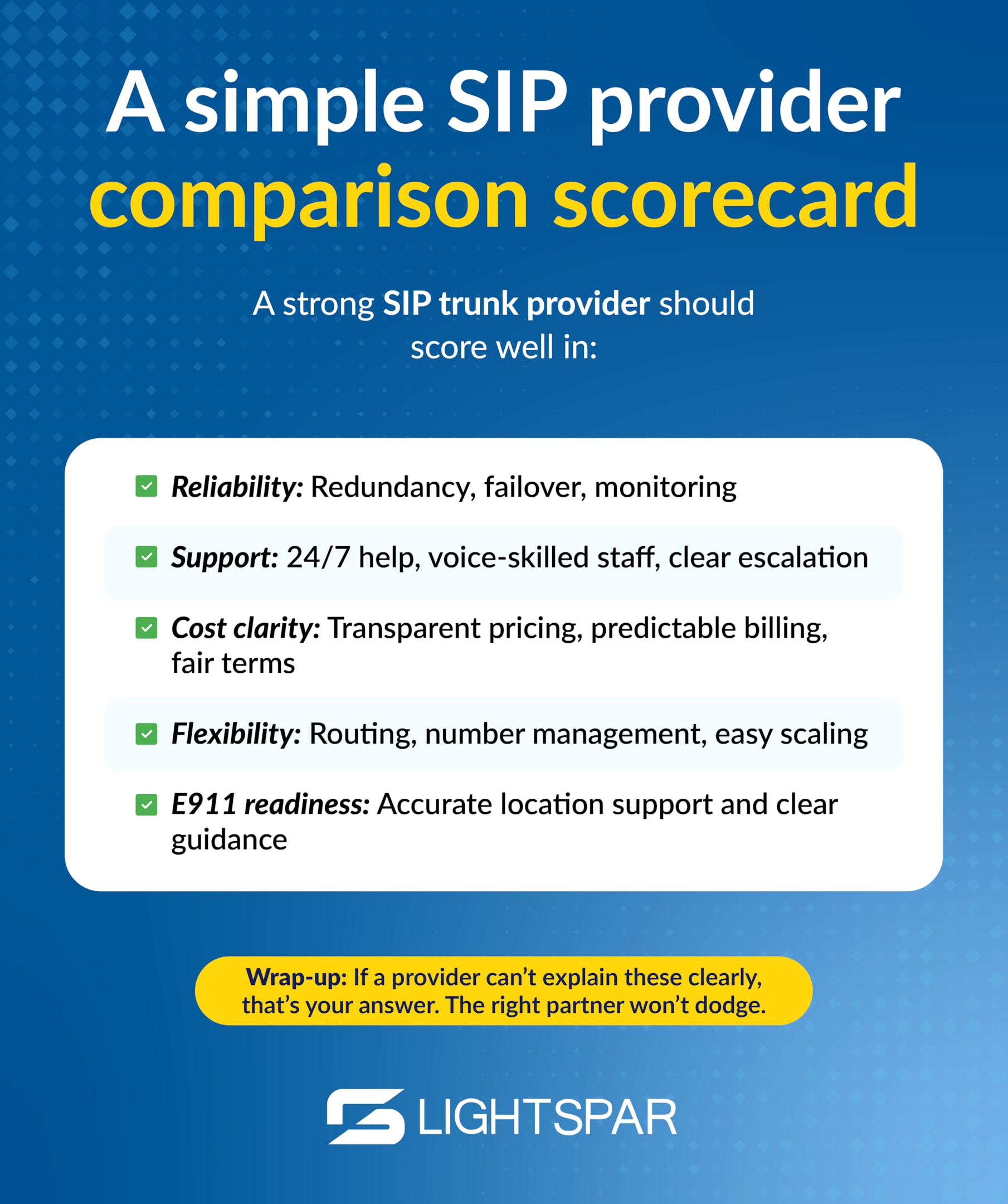
1) Reliability first, because phone glitches get expensive fast
A SIP trunk provider should keep calls steady when the real world gets messy. Spoiler alert: it will. ISPs go down. Power blips happen. A contractor “finds” a fiber line with a backhoe.
Reliability is not a slogan. It’s how the provider is built, and how fast they respond when something breaks.
What to look for
- Backup routes (real redundancy), like more than one carrier and more than one network location, so incoming calls can take another path when one route fails.
- Failover you can actually use, like sending calls to another site, a call center, or mobile numbers if your main system or circuit goes down.
- A real SLA with plain terms, so “uptime” is defined, measured, and backed by a clear process when there’s an outage.
- Monitoring that checks call quality, so jitter and packet loss get flagged before the whole office starts saying, “You’re cutting out.”
Strong reliability keeps your voice service boring. Weak reliability turns the phones into a weekly surprise.
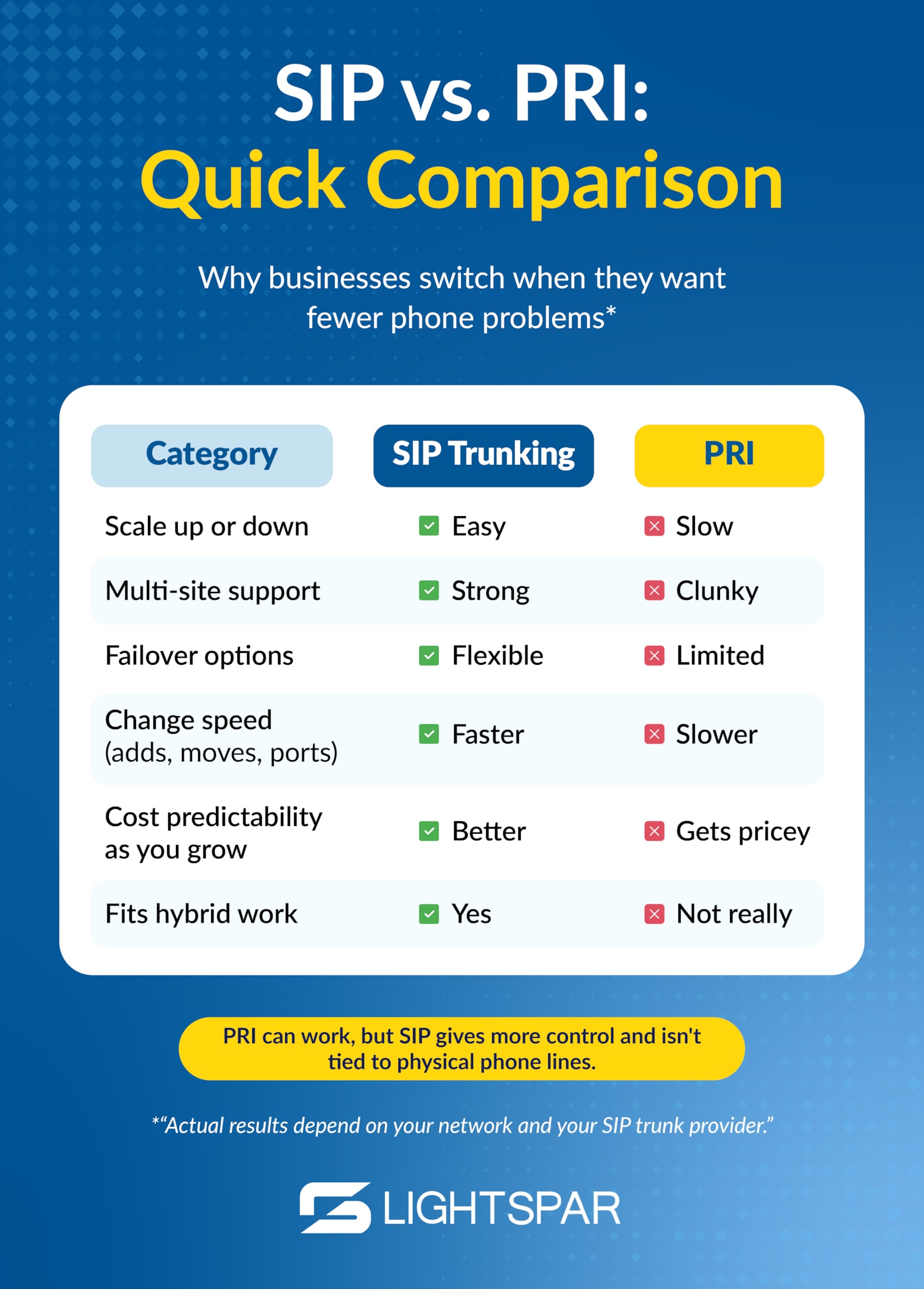
2) Cost transparency, so the bill stays predictable
Yes, SIP trunking can lower costs. However, “cheap” can get pricey fast if the invoice comes with surprise fees. The goal is not the lowest rate. It’s a bill that stays predictable.
What to look for
- A full quote that includes the usual extras, like E911, porting, taxes, and any usage charges, so there are no surprises later.
- Pricing that matches how you actually call, like call-path pricing for steady traffic or flexible capacity if calls spike at certain times.
- Simple contract terms, so you’re not locked into a bad fit or hit with penalties for normal changes.
Clear pricing protects the budget. It also saves time, because no one wants to argue with a phone bill every month.
3) Support, because phones don’t break on a schedule
When phones break, it’s loud. Customers call back, staff get pulled into the mess, and leaders want answers. In those moments, you don’t want a SIP trunking provider who passes you off to someone else. You want them to treat ongoing customer support as part of their product (because it should be).
What to look for
- 24/7 outage support, so you can reach a real person nights and weekends when calls are down.
- Voice-skilled technicians, so you’re not stuck explaining basic call flow and network issues to someone reading a script.
- Clear escalation, so you know who owns the issue and how fast it gets moved up the chain.
Great support keeps a bad moment short. Weak support turns a small outage into a long day.
4) Features that keep routing flexible, not flashy
Most “features” sound good. The ones that matter reduce downtime, reduce manual work, or make growth easier.
What to look for
- Smart call routing, so calls can go to the right site, team, or on-call person without duct-tape workarounds.
- Fast number management, so moves, adds, and changes don’t take a week of emails.
- Built-in fraud controls, like international call limits and alerts, so you don’t get hit with surprise charges from bad actors.
- Easy scaling, so adding call capacity or new sites doesn’t require a full redesign.
The right phone system features make voice flexible, stable, and cost effective. The wrong ones add complexity without solving real problems. For a more comprehensive list, reach out to LightSpar, and we’ll show you what we’ve got.
5) Doesn’t treat E911 like an afterthought
Many providers will say, “We support E911,” but that’s the bare minimum these days. The better question is whether they make it easy to set up, keep accurate, and avoid errors when numbers change, sites shift, or people move.
What to look for
- Accurate location support, so the right address (and site information) is tied to the right phone numbers/SIP lines.
- Clear responsibility lines, so you know what the provider handles and what your team must keep updated.
- An easy update process, so changes don’t fall through the cracks when teams move or sites change.
If a provider is sloppy or vague about E911 when talking about their SIP trunking service, that’s not a small flaw. It’s a flashing red warning sign. E911 deserves a provider who treats accuracy and follow-through as core parts of the service, because they are.
Need something to compare their answers to? Check out these resources below:
To Sum Up: The Best SIP Trunk Provider Keeps Voice Reliable
Phones should not be a weekly project. The right provider keeps voice calls clear, routing flexible, and costs predictable.
That’s what we do all day, every day, at LightSpar. We make sure your business voice connectivity is always on, always reliable, and always affordable.
Want help pressure-testing options or sanity-checking a quote? We’d be happy to help!