Quick summary
Cloud PBX gives a small business owner a phone system with more room to grow than a traditional or on-premises PBX.
- Cloud PBX is a cloud-based version of a legacy PBX. It manages extensions, voicemail, auto attendants, and call routing without a phone closet full of hardware.
- It uses internet protocol and VoIP technology to handle phone calls over an internet connection instead of old copper lines.
- A cloud PBX helps small businesses and medium-sized businesses support remote workers, remote teams, multiple users, and multiple devices.
Your Phone System Shouldn’t Depend on One Closet
Every office or building has one. The closet with wires, blinking lights, old manuals, and a mystery box nobody wants to touch. As integral a piece of your business as it is, too often it’s treated like the kitchen junk drawer, and somewhere in there, the phone system lives.
Most days, nobody thinks about it, and nor should they. But as with anything, the needs of the business change. A manager wants calls on a cell phone. A new hire needs a business phone number. A second location opens, but the phone system needs to treat all locations as one. Then, someone asks for video conferencing, instant messaging, call logs, or voicemail transcription. The old phone company says the system is too old for easy changes or drastic feature additions.
The trusty traditional phone system now starts to feel tight and is quickly becoming a liability. For now, they may still work, but soon enough they won’t fit the way businesses operate today.
Cloud PBX gives businesses a different path. It moves the phone system’s core features to the cloud, so your team can make and receive calls from desk phones, an IP phone, a desktop app, mobile phones, or other approved devices. And best of all, you don’t have to worry about hardware upkeep in a dusty closet.
What Is a Cloud PBX?
Let’s not assume anything, so before jumping into anything too deeply, we’ll clear up some terminology.
- PBX stands for private branch exchange. Basically, it’s the system that handles business phone calls. It routes inbound calls, supports outbound calls, manages extensions, sends people to voicemail, and helps direct callers to the right person.
- A traditional PBX sits at your location.
- A cloud PBX is hosted by a provider and managed through the cloud.
- A hosted PBX has the same basic idea: the PBX system is not sitting in your office, and the provider maintains it.
- VoIP is the technology that lets phone calls travel over the internet.
- Cloud PBX is built on VoIP. So the difference between VoIP and hosted PBX is simple: VoIP is the calling technology; hosted PBX is the full business phone system that uses it.
You may have heard of some or all of these terms, but the point is that these are the pieces that come together to make up business communication.
Cloud PBX vs. Traditional Phone Systems
Business Need | Traditional PBX Challenge | Cloud PBX Advantage |
Remote work | Calls stay tied to the office | Users can work from a mobile app or a desktop app |
Growth | Adding users may require hardware | Cloud PBX can support multiple users faster |
Customer service | Basic routing may be limited | Advanced features can include call routing, queues, and auto attendants |
Collaboration | Voice may sit apart from other tools | Unified communications can combine voice, video, chat, and file sharing |
Cost | Hardware and maintenance add up | Cost savings may come from lower setup costs and fewer hardware needs |
What Unified Communications Means
Unified communications is the practice of using software to bring your business communications tools together rather than living in separate silos. The three main components of unified communications are usually voice, messaging, and video. Unified Communications as a Service, or UCaaS, provides businesses with those tools through a cloud platform.
An example of unified communication is a team using a single platform for business phone calls, video calls, chat, SMS, presence, and file sharing.
LightSpar’s unified communications platform includes cloud calling, video meetings, chat and messaging, mobile features, call forwarding, call queue management, IVR, and integrations with business apps. It is built to help teams stay connected without forcing every conversation through one desk phone.
Better Uptime Starts With Fewer Failure Points
To be crystal clear, no phone system can promise a perfect day every day. But cloud PBX can reduce the risk of one local issue taking down every call.
With a legacy PBX, you’re completely dependent on local power, local equipment, and local wiring. If that setup fails or even briefly stutters, incoming calls may not reach your team. With cloud PBX, calls and features can often be rerouted, answered from another device, or handled by another location.
This redundancy supports business continuity without making the topic sound like a disaster movie. Accidents will inevitably happen: A road crew cuts a line. A storm closes the office. A desk phone breaks. Your team still needs a way to answer customer calls.
Mobility Helps More Than Remote Workers
Mobility features are not only for people working from home. They help anyone who’s not glued to a desk.
A sales manager can return calls while on the road and between appointments. A service dispatcher can handle urgent customer updates away from the office. Other team members can cover incoming calls during lunch or after hours. Meeting rooms can support video calls when a face-to-face interaction is more impactful than another email.
LightSpar’s mobile tools allow users to make and take voice and video calls, send instant and SMS messages, share files, and use communication tools from an internet-connected device. Features like Siri calling and seamless Wi-Fi-to-cell handoff help the business phone work more like the way people already work.
Flexibility Without the Phone System Drama
Here’s a little operational bonus: cloud PBX can make change management easier.
Need a new phone number? Need custom voicemail? Need better call flows for high call volumes? Need caller ID, call control, or a virtual receptionist to direct callers after hours?
With older systems, those requests can become a small project. With cloud PBX, many important features are easier to adjust because the system is managed in the cloud.
LightSpar supports integrations through 200+ plug-and-play APIs, including tools such as Google Workspace, Microsoft Dynamics, and other business apps. That helps streamline business communications instead of forcing the team to bounce between too many systems.
What About Call Quality and Cost?
Call quality is a fair concern. Cloud PBX needs the right network setup, bandwidth, and provider support. A weak or unreliable connection can make a good platform feel bad.
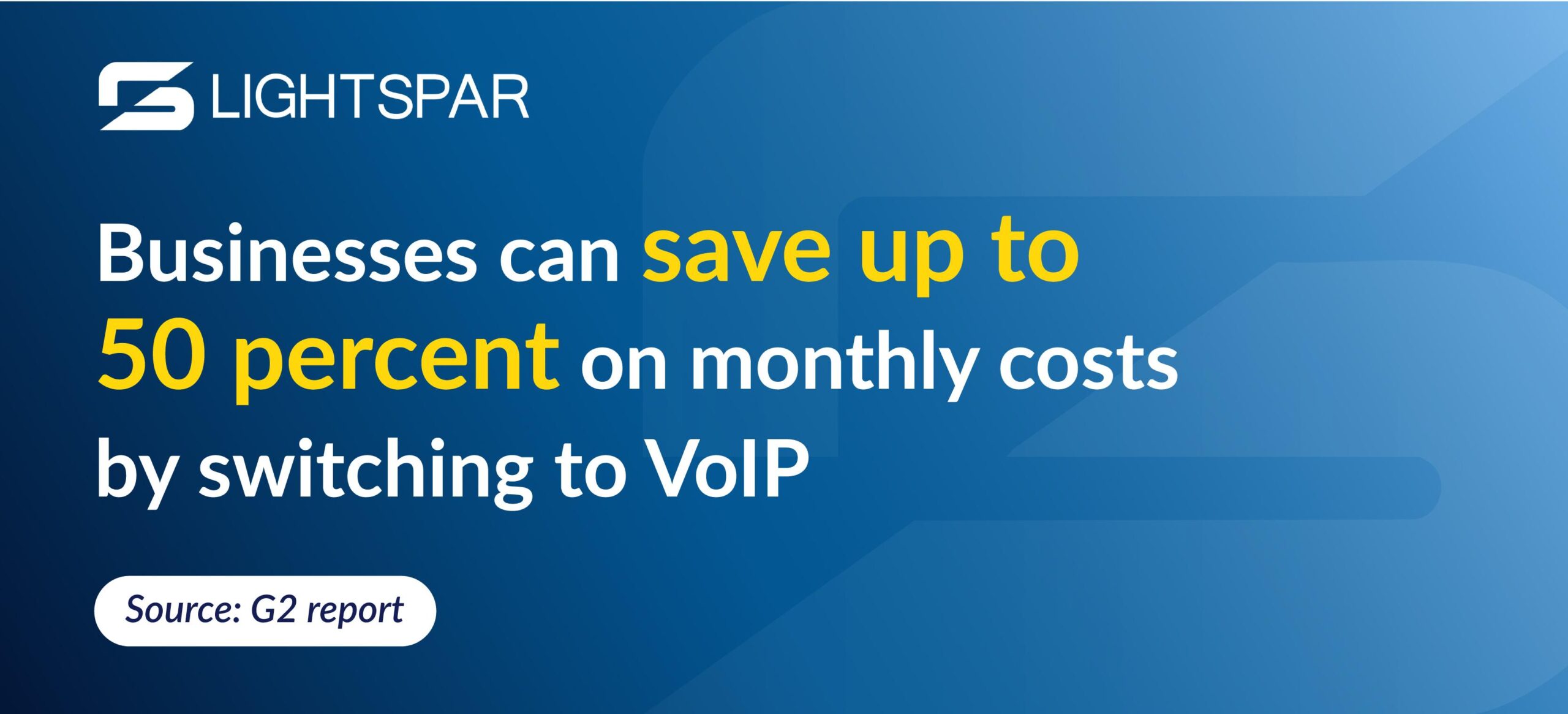
Cost is also not one-size-fits-all. Cloud PBX will feel quite a bit different at the beginning because you’re going to pay a monthly subscription fee instead of buying everything upfront. According to a G2 report, businesses can save up to 50 percent on monthly costs by switching to VoIP. On top of the cost savings, maintenance and updates are handled by the provider, which can reduce IT headaches over time.
LightSpar is useful here because we offer more than cloud PBX. Our services include unified communications, network services, SD-WAN, cloud, contact center, and SIP options. The breadth of services gives businesses one conversation around voice, connectivity, and support instead of navigating another vendor maze.
Customer Experience Is the Real Test
At the end of the day, customers don’t care what phone system you use.
What they care about is whether someone answers, whether they reach the right person, and whether they have to repeat the same story three times.
Cloud PBX helps improve the customer experience with call routing, auto attendants, SMS, presence, voicemail transcription, call logs, CRM integrations, and collaboration tools. These tools alone won’t replace good service, but they do make good service easier to deliver.

When Cloud PBX Makes Sense
Cloud PBX isn’t a fly-by-night technology. It’s clearly the natural successor to traditional on-site PBXs, and just think about how many decades they have been in offices. This hasn’t been an all-of-a-sudden shift, either; it’s been years in the making.
With that being said, cloud PBX may be a good fit if your business needs better mobility, supports remote teams, has multiple locations, wants fewer hardware headaches, or needs unified communications with video meetings and team collaboration.
The real reason businesses switch is simple: the old setup starts getting in the way.
LightSpar can help you review your current phone system, understand what needs to change, and build a cloud PBX and unified communications setup that supports how your team works now. Your business phone should help the business move in the right direction. Contact LightSpar today to get a no-obligation consultation for cloud PBX.