
Quick summary
Hosted VoIP may be right for you if you need a phone system that’s easier to manage across people, locations, and devices. Before switching, compare reliability, call quality, migration support, and useful features.
When a business grows, the cracks in an old phone system show up fast. Call volume climbs. Someone’s working from home. Another office opens.
If you’re looking into a business phone system upgrade, it’s worth asking whether a hosted VoIP service would make business communications easier without creating new headaches.
What Is a Hosted VoIP Service?
Hosted VoIP is a cloud-based phone system that sends voice calls over an internet connection using internet protocol instead of traditional phone lines.
Your VoIP provider manages the core VoIP system, so you don’t keep the entire phone system in your office because hosted VoIP requires no physical hardware on-site.
Employees can use a VoIP phone, IP phone, desk phones, a desktop or mobile app, or a mobile phone to make and receive phone calls.
VoIP systems are also more scalable than on-premises alternatives.
When searching VoIP solutions, you might also see:
- Cloud phone system
- Cloud calling
- Hosted PBX
- Business VoIP
- VoIP telephony
- Hosted VoIP phone system
The labels vary, but the idea is similar: business calling moves to the cloud.
Does a Hosted VoIP Phone System Fit with the Way Your Team Works?
Start with people, not features.
If employees move between offices, work remotely, or spend time in the field, a hosted VoIP system can give them access to a business phone number without tying them to one desk. A Hosted VoIP system can also adapt to changing call volumes easily.
Local phone numbers and virtual phone numbers can also help small businesses organize calling by office, market, or department.
A good VoIP solution should make mobile calling feel like part of the same business communication system. Ask whether users can move between devices and use mobile and desktop apps.
Can Your Internet Support Business VoIP Reliably?
Hosted VoIP depends on internet access. There’s no getting around that.
A reliable internet connection matters because voice traffic shares the network with everything else. Weak connectivity can affect call quality when phone calls, video conferencing, and other traffic compete for bandwidth.
Before choosing a hosted VoIP service, ask the service provider how they handle call monitoring, outages, and support. A low monthly price isn’t much of a win if customer conversations keep getting interrupted.
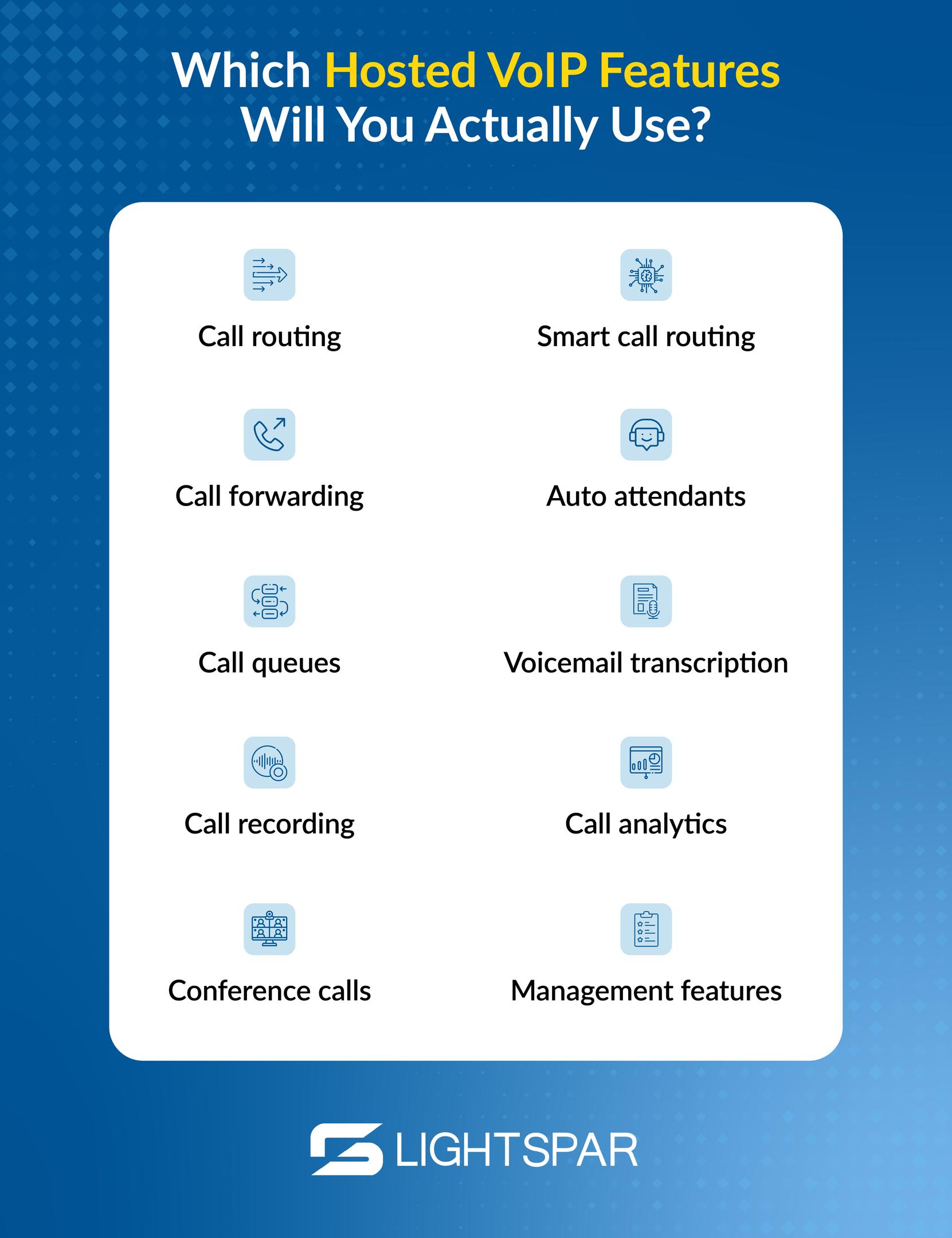
Which Hosted VoIP Features Will You Actually Use?
Plenty of hosted VoIP solutions advertise dozens of features. Your team probably doesn’t need all of them.
For everyday call handling, useful cloud calling features might include:
- Call routing
- Smart call routing
- Call forwarding
- Auto attendants
- Call queues
- Voicemail transcription
- Call recording
- Call analytics
- Conference calls
- Management features
Do employees need team messaging, team chat, instant messaging, business texting, video meetings, video calling, or other team collaboration features?
Bringing those communication channels and collaboration tools together through a unified communications platform can help streamline business communications.
LightSpar’s unified communications offering combines cloud calling with video meetings, chat, messaging, and mobile access.
When comparing plans, ask what’s included per user. Terms like unlimited calling or unlimited domestic calling, unlimited video conferencing, and international calling can mean different things from one VoIP service to another.
Check the details.
What Will the Switch to a Cloud Phone System Look Like?
A new business phone system shouldn’t create a week of chaos.
Ask providers how they’ll move your current phone number or phone numbers, configure users, set up call handling features, and test the new phone service. If you’re moving from traditional phone systems, find out whether existing desk phones can stay.
Ask how employees will be trained on the desktop app, mobile app, video conferencing, and team messaging.
If you’re comparing a hosted VoIP phone system with Zoom Phone or another business VoIP system, don’t compare feature grids alone.
Compare migration help, support, reliability, and how easy the system will be to live with after launch.
What Does Hosted VoIP Really Cost?
Hosted VoIP is often priced per user and is generally more cost-effective than traditional systems, but the headline rate isn’t the whole story.
Look at hardware, setup, number porting, taxes and fees, international calling, support, and premium advanced features. Ask whether features like call recording, call summaries, post-call summaries, business SMS, voicemail transcription, or advanced AI features cost extra.
A hosted VoIP service that fits your workflows may reduce complexity and make call handling easier.
How Much Should AI Matter?
AI shouldn’t decide whether you choose hosted VoIP, but it’s worth considering what comes next.
For example, LightSpar’s AI Receptionist can answer inbound calls, collect customer data, route callers, take messages, and connect people with the right next step.
More advanced AI features may become part of hosted VoIP solutions over time, so ask what your provider supports now and what can be added later.
Questions to Ask Before Choosing Hosted VoIP
Before choosing VoIP for your business communication system, ask:
- How do you protect call quality during busy periods?
- Which hosted VoIP features are included per user?
- Do you support local phone numbers and virtual phone numbers?
- Are call recording, call analytics, call monitoring, and voicemail transcription included?
- Does the platform support video conferencing, team chat, and business texting?
- What happens if our internet connection goes down?
- Can the phone system connect with our existing collaboration tools?
- What migration and ongoing support do you provide?
So, Is Hosted VoIP for Business Right for You?

Hosted VoIP makes sense when your business wants a more flexible phone system, has reliable internet access, and is ready to manage voice alongside the other ways employees and customers communicate.
The right hosted VoIP solutions should support your business needs now while giving you room to adjust later.
LightSpar takes a flexible, reliable, practical approach to hosted VoIP and unified communications, helping build a business phone system around how they actually work.
If you’re weighing your options, choose the VoIP solution that makes communication easier, not more complicated. Reach out today for help!